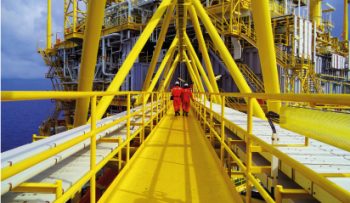
Established in 1983, PT. Pratita Prama Nugraha (Pratita) started its business supplying NDT products to fulfil the needs of its NDT customers. Throughout the years, Pratita has developed its businesses, encompassing various technologies for implementation in different industry sectors ranging from oil and gas, power plant, inspection companies, shipyard fabrication, aviation, fertilizer, pipe manufacturers, medicals, petrochemicals, and automotive.
Since the beginning, Pratita has always dedicated its work in ideal safety to ensure that integrity can survive for a long time, that weakness can be understood, and that mistakes can be anticipated.
Our employees in Jakarta’s Head Office as well as our branches in Batam, Pekanbaru, Balikpapan, Surabaya, Cilegon, and the newest one in Makassar, enables us to reach out and answer the needs of our customers. Our services include after-sales service warranty, technical assistance, training, and updates on the latest technology. With competence in Industrial Engineering, Electrical Engineering, and Information Technology we have also established our Workshop and Calibration department that has been accredited by the National Accreditation Committee (KAN).
What began 4 decades ago, is now ready to grow further and to rise up to the new and distinctive industry and economy landscape. In 2019, Pratita enters its 3rd milestone and marks a new page in the company’s history where it will answer the new challenges of digitalization and increasing customer demand.
With this renewed spirit and determination, Pratita will bring aboard new changes within the company – starting from our new logo, to new practices, as well as corporate culture -. With honesty and hardwork we are determined to take on the challenge of providing continuous supply and maintaining excellent service for our customers, and more importantly, to assure the industrial safety of Indonesia through NDT.